Steal Kill Destroy
The Authoritarian Trifecta

In 1989, Robin Williams starred in the cinematic masterpiece, Dead Poets Society. It released in the final year of the decade that birthed, full-bore, White Christian nationalism. When I watched Dead Poets Society, I was entirely familiar with the darkest themes of the story.
(So many kids in the 80’s endured the terror of Christian fundamentalism and we are rising now to sound the alarm. Dead Poets Society remains a testament to the dangers of authoritarianism to this day. We absolutely must heed the wake up call.)
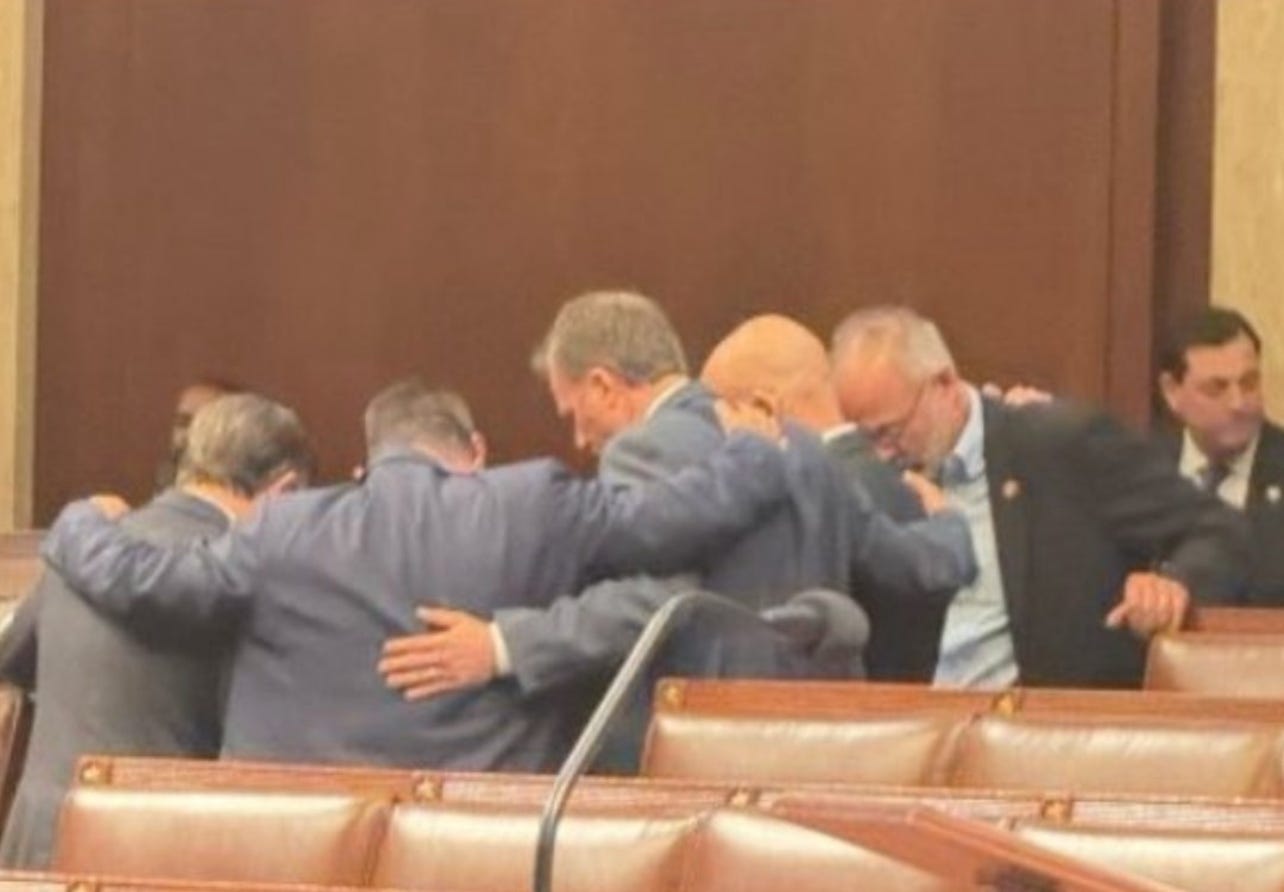
Central to the story in Dead Poets is the character of Neil Perry, played by Robert Sean Leonard. Neil is a tenderhearted teenage boy, whose artistic passion is ignited by the encouragement of the new English teacher, Mr. Keating, played by the inimitable Robin Williams.
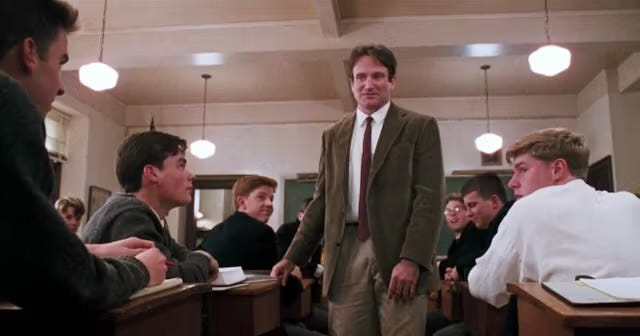
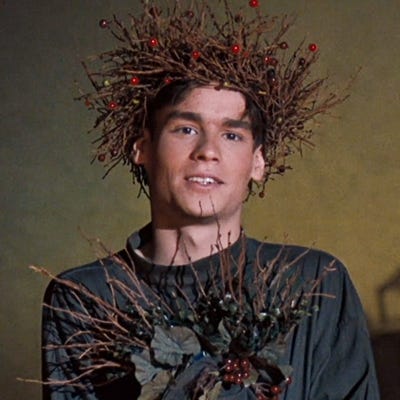
In the story, Neil was awarded the part of Puck, a fairy, in a community theatre production of Shakespeare’s A Midsummer Night’s Dream. Neil took the part in defiance of his father, who had strictly forbidden it.
The consequences were gut wrenching.
Neil’s defiance would be punished with an ostensible incarceration at a military academy, a fate he could not fathom, and ultimately, refused to endure. Neil Perry took his own life before the consequences of defying his father could be imposed.
What we witness in the film is the rigid conformity all the boys at an upper-crust preparatory school must adhere to, lest they be punished as well. There is a particular scene that is unnerving in its sado-sexual overtone; a scene in which the Headmaster takes great delight in beating a boy named Charlie Dalton, for deigning to challenge his authority. Charlie mocked the Headmaster and then Charlie paid dearly.
It is a stomach turning scene. But make no mistake, there are those in this world who believe the beating of a teenage boy may be perfectly reasonable and justified.
There are those who would enjoy it.
(It’s hard to believe in 2025, there are still multitudes of human beings that believe hitting, berating, humiliating, slapping, shaming, or beating a child is perfectly acceptable. This is ghastly.)
Dead Poets Society is a study in both the devastation of authoritarianism and the blame-shifting authoritarianism expertly employs to evade accountability for being the life-snuffer that it is. Did Neil Perry kill himself because of his father’s cruelty or did he kill himself because he was led astray by a teacher who tempted him to dream a different dream than his father’s? The school chose the latter and punished Mr. Keating, as well.
Authoritarianism assassinates souls and then blames them for their inability to endure and conform. Dead Poets Society gives us a front row seat to exactly how the authoritarian stratagem is masterfully executed. We have been given this film (among others) as a cautionary reminder of how we sometimes get things horrendously wrong.
The film is a gift. And a warning.
My heart ached for Neil Perry. It ached for his friends, who grappled with Neil’s suicide and then the swift termination of their beloved teacher. My heart ached for Mr. Keating as he was scapegoated by Neil’s father and also the school. The alternative would have been for the school to take responsibility for the harshness, perfectionism it inflicted on adolescent boys. But we know that didn’t happen. A sinister system of brutality remains in place today and it is anything but fictitious.
Neil Perry was buried along with the truth. The school remained the pinnacle of excellence and achievement, never mind the lies.
God forbid we tell the truth. But whether we tell it or not, the truth perseveres and eventually comes to light. Even then, we sometimes still choose denial.
Theatrical trailer, Dead Poets Society ~
******
Several years ago, there was a horrific story out of Shenandoah, Pennsylvania, about four high school football players who beat a Mexican immigrant, a gentleman named Luis Ramirez, to death. The brutal murder happened in 2008, and a documentary about the crime, unassumingly titled, Shenandoah, released in 2012.
I thought of this story of hatred and murder as I wrote about Dead Poets Society. I thought about Neil Perry and I thought about a very real boy, one of the gang of boys in Shenandoah, who received a light sentence and returned to high school, never to play football again. He lives with deep and abiding regret. His redemption included embracing his gifts in the performing arts. The parallels of the two stories are imperfect, but White male violence underpins them both.
(There is a heavy dose of White female violence in Shenandoah, as well. It is victim-blaming akin to the narrative, “Well, she wouldn’t have been raped if she wasn’t dressed like that.” It’s not for the faint of heart.)
I also thought of the trauma suffered by the family of Luis Ramirez. Not just the trauma of their grief, but of the no-doubt ceaseless imagery of his brutal murder. It is unthinkable. Families of murdered loved ones endure a special kind of hell the rest of us know nothing about. (May we be grateful, amen?)
I thought about who exactly do Americans think we are? In our grandiosity we are blind to our own history and lust for glory. We must be seen as the most supreme, the absolute best. Or else. I thought about the menacing paradox of such posturing. I thought about the lives destroyed by it. Others and our own.
Trailer for the documentary, Shenandoah:
***
At the end of my 7th grade school year, I was in a musical play called Kaleidoscope USA. It was phenomenally fun. One of the songs we sang was Shenandoah. I remember every word and I chose Celtic Woman’s rendition of the song to link here. It is incredibly beautiful.
The Irish know a thing or two about oppression, and the gifts of Irish immigrants, in spite of it all, have shaped American life in many significant and lasting ways. It seemed respectfully apropos of the tragic story of Luis Ramirez, to share this particular rendering of Shenandoah, one of the greatest of all American folk songs.
Celtic Woman, Shenandoah ~
****
George Michael, international rock star and social justice titan, died on Christmas Day in 2016. His generosity with his gifts were well known; his courage to be unapologetically himself, paved the way for LGBTQIA rights in ways that would be impossible to measure. His generosity with his fortune didn’t come to light until after his death. He was intentionally private about it (and nobly so). I thought it would be a lovely tribute to mention him in this piece today, in remembrance of the life-giving and liberating music he gave to the world.
Today, American Independence Day, is always a good day to remember that freedom isn’t free. People like George Michael paid in ways we will never know. His advocacy for those living (and dying) with HIV and AIDS is a testament to the kindness and love he had for others, mostly those who had much, much less than he.
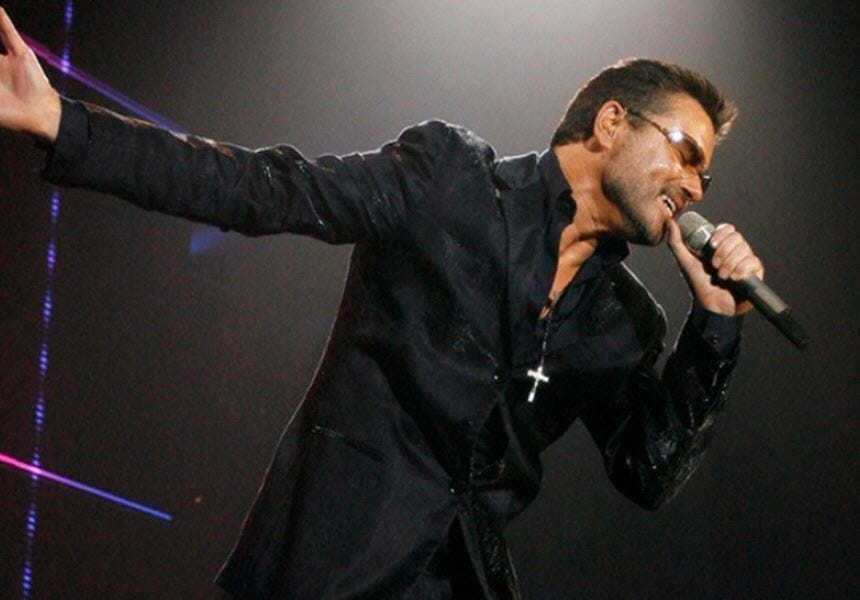
George Michale’s song, Freedom! ‘90, is a personal favorite and it fits the pressing call to action many artists are wrestling with right now. Myself included.
A lyric:
“All we have to do now
Is take these lies
And make them true somehow
All we have to see
Is that I don't belong to you
And you don't belong to me, yeah yeah”
George Michael ~ Freedom! ‘90
***
American political power is currently struggling to keep a death grip on its delusions of supremacy. We all stand to lose in unimaginable ways because of it. This isn’t hyperbole; the worst is coming and the alarms are going all the way off.
I think of the words of Puck as I write this: “Lord, what fools these mortals be.”
Indeed, Puck, indeed.
More hopefully, let us remember what Jesus told us in John 10:10, “The thief comes only to steal and kill and destroy; I have come that they may have life, and have it to the full.”
Heaven help us. May we, as a collective, become increasingly aware of the ineffaceable truth that, come what may, Love always has the final word. To that end, let us seize the day.
Carpe Diem,
Kathryn